Monday, September 29, 2025

Global Milking Automation Market: Competitive Landscape and Key Players

The global milking automation market is valued at USD 2.61 billion in 2025 and is projected to reach USD 3.68 billion by 2030, growing at a CAGR of 7.1%. The market is undergoing a significant transition driven by rising milk demand, labor shortages in dairy farming, and the growing emphasis on efficiency, animal welfare, and sustainability. Traditionally manual, dairy operations are rapidly shifting toward automation through robotic milking systems, automated parlors, and herd management platforms.
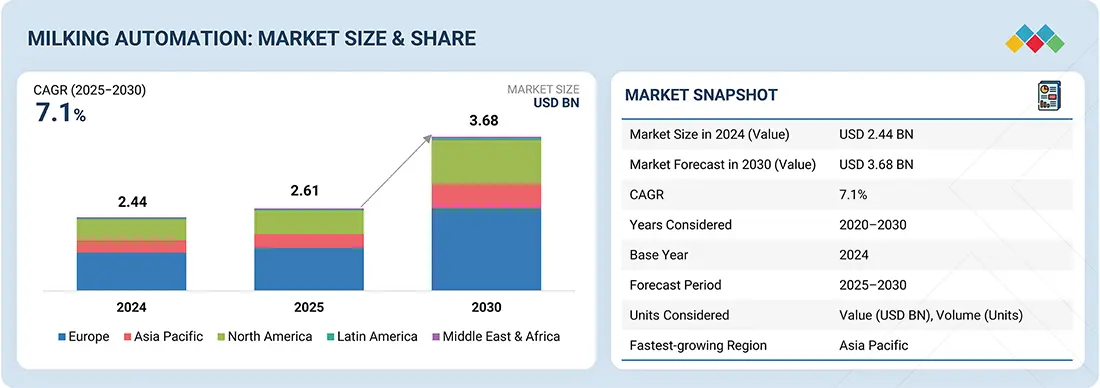

 Milking Automation Market


Adoption is currently strongest in Europe and North America, where large-scale farms and supportive regulatory frameworks enable deeper market penetration. While global adoption is still developing, growth is expected to be steady as automation addresses key challenges in food security, product quality, resource optimization, and customer-specific production.

Download PDF Brochure: 
https://www.marketsandmarkets.com/pdfdownloadNew.asp?id=265039621

Software Leading the Offering Segment

Software is projected to capture a major share of the market. Initially limited to basic yield tracking, herd management platforms have evolved into advanced decision-support systems integrating health, reproduction, nutrition, and compliance data. These platforms consolidate inputs from robots, parlors, sensors, and ID systems into actionable dashboards. They track milk yields by stall or robot, flag issues such as incomplete milkings or mastitis risks, and generate daily worklists for reproduction and herd health. Interoperability—through open APIs, standardized data, and localized support—has become essential as farms increasingly rely on multi-vendor solutions.

Growing Role of Goat Dairying

The goat milking automation segment is forecast to register a notable CAGR during the period. Goat dairying is shifting from smallholder production to semi-industrial operations, fueled by demand for specialty cheeses, infant formula ingredients, and lactose-free products. Growth is particularly strong in the Mediterranean, MENA, East Africa, India, China, and North America. Automation solutions for goats must account for unique physiology, requiring smaller teat cup designs, higher pulsation rates at lower vacuum levels, and compact parlor systems. Parallel and rotary parlors equipped with automatic detachers, gentle liners, auto-spray systems, and in-line quality sensors are increasingly deployed for herds ranging from hundreds to thousands. Automated drafting is particularly beneficial for managing seasonal breeding cycles and herd health.

Request Sample Pages: 
https://www.marketsandmarkets.com/requestsampleNew.asp?id=265039621

Asia Pacific as the Fastest-Growing Market

The Asia Pacific region is expected to record the highest growth from 2025 to 2030. Rising milk consumption, dietary shifts toward protein, greenfield investments, and modernization policies are accelerating adoption. China is driving growth through mega-dairy projects and vertical integration of data platforms. India is advancing more gradually, with cooperative models and selective adoption of parlors and robotic pilots in commercially active states. Australia and New Zealand represent mature adopters, optimizing pasture-based systems with automation. Meanwhile, Japan and South Korea lead in high-tech dairy adoption, and Southeast Asia is experiencing gradual growth with semi-automation, sensor-based monitoring, and financial models supporting adoption.

Key Market Players:

The report profiles key players such as DeLaval (Sweden), Afimilk Ltd. (Israel), GEA Group (Germany), Nedap N.V. (Netherlands), Allflex Livestock Intelligence (US), BouMatic (US), Waikato Milking Systems (New Zealand), Dairymaster (Ireland), and BECO Dairy Automation Inc. (US).

Friday, September 26, 2025

Nematicides Market Insights: Technological Developments and Innovations

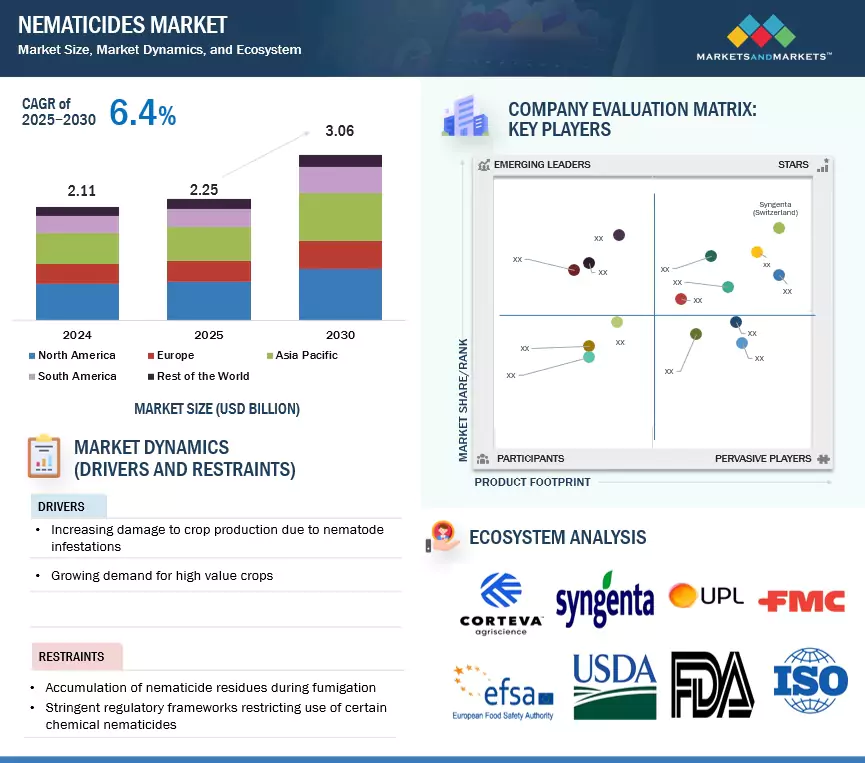
The global nematicides market is projected to grow from USD 2.25 billion in 2025 to USD 3.06 billion by 2030, registering a CAGR of 6.4% during the forecast period. This growth is driven by increasing crop losses caused by plant-parasitic nematodes, rising demand for high-value crops such as fruits, vegetables, and plantation crops, and the need to improve yields on limited arable land. Innovations in seed-applied treatments, precision agriculture, and integrated pest management (IPM) have enhanced nematode control, while stricter regulations on chemical fumigants are boosting the adoption of bio-based alternatives. Additionally, continuous product innovations, supportive government policies, and strategic investments by agrochemical companies are further fueling market expansion.

Download PDF Brochure: https://www.marketsandmarkets.com/pdfdownloadNew.asp?id=193252005

Nematicides Market

By Mode of Application: Soil Dressing Segment to Hold Significant Share

The soil dressing segment is expected to hold a substantial share of the nematicides market due to its efficiency in directly targeting soil-borne nematodes at the root zone, where crop damage begins. This application method ensures uniform distribution, better root penetration, and prolonged protection against nematode infestations. Farmers widely prefer soil dressing for its ability to enhance root establishment, improve nutrient uptake, and boost yields in crops like vegetables, cereals, and pulses. It is particularly effective in intensive farming systems with high nematode pressure. Advancements in granular and liquid soil-applied formulations have further improved ease, safety, and efficiency of application. As demand for sustainable crop protection rises, soil dressing remains a critical tool for precise application and minimal wastage.

By Crop Type: Fruits & Vegetables Segment to Lead the Market

Fruits and vegetables are projected to hold the largest share of the nematicides market, driven by their high economic value and susceptibility to nematode infestations. Root-knot and cyst nematodes significantly affect crops such as tomatoes, cucumbers, potatoes, carrots, and citrus, leading to considerable yield and quality losses. Rising consumer demand for fresh, residue-free produce is prompting farmers to adopt both chemical and biological nematicides. Intensive cultivation practices and year-round production cycles in horticulture further increase nematode pressure, making effective management essential. Regions including Europe, North America, and Asia Pacific, with large-scale fruit and vegetable production under protected cultivation, have accelerated the adoption of advanced nematicide formulations, including seed-applied and bio-based products, reinforcing the dominance of this crop segment.

Request Sample Pages: https://www.marketsandmarkets.com/requestsampleNew.asp?id=193252005

By Region: North America to Remain Dominant

North America is expected to account for the largest share of the global nematicides market, driven by extensive cultivation of high-value crops such as soybeans, corn, cotton, and vegetables, all highly vulnerable to nematode infestations. Root-knot, soybean cyst, and lesion nematodes contribute to significant yield losses, fueling demand for effective nematode management solutions. The prevalence of large-scale, mechanized farming systems in the US and Canada supports the use of nematicides as farmers strive to maximize productivity on limited arable land.

The region’s market leadership is further supported by the adoption of seed-applied nematicides and integration of nematode control into precision agriculture practices. Seed treatments provide targeted, cost-effective, season-long protection, aligning with modern sustainable farming trends. Continuous innovation and product launches by leading agrochemical companies, combined with research support from universities and government extension programs, have boosted awareness and adoption of advanced nematicide solutions.

Additionally, a favorable regulatory environment encourages the introduction of biological and bio-based nematicides, complementing chemical solutions. Growing consumer demand for residue-free produce and stricter environmental standards have accelerated the shift toward sustainable products.

Leading Nematicide Companies:

Major companies profiled in the nematicides market include BASF SE (Germany), Bayer AG (Germany), UPL (India), Corteva (US), Novonesis Group (Denmark), FMC Corporation (US), Nufarm (Australia), Syngenta (Switzerland), American Vanguard Corporation (US), and Sumitomo Chemicals (Japan).

Thursday, September 25, 2025

Global Specialty Feed Additives Industry Report: Market Drivers, Challenges, and Opportunities

 The global specialty feed additives market is valued at approximately USD 16.81 billion in 2025 and is projected to reach USD 21.01 billion by 2030, growing at a CAGR of 4.6% during the forecast period. Rising emphasis on animal health, feed efficiency, and sustainable livestock production is driving strong demand for specialty feed additives. These additives enhance nutrient absorption, gut health, immune response, and overall animal performance. They provide targeted nutritional benefits, including improved digestion, disease resistance, and optimized growth. Key products in this category include enzymes, probiotics, organic acids, and phytogenics, which are widely used across poultry, swine, ruminants, and aquaculture. Increasing consumer preference for natural, antibiotic-free additives—driven by global regulations phasing out antibiotic growth promoters—is further fueling market growth. Ongoing innovations in additive formulations tailored to specific species and production goals are supporting the adoption of specialty feed additives to promote efficient and sustainable animal nutrition.

Specialty Feed Additives Market

Download PDF Brochure: https://www.marketsandmarkets.com/pdfdownloadNew.asp?id=72590192

Poultry Feed Additives Lead Market Growth

Poultry feed additives are expected to register the highest CAGR among livestock sectors during the forecast period. Global poultry production and consumption are on the rise, with the OECD-FAO Agricultural Outlook 2025–2034 projecting poultry meat to account for 62% of global meat production, reaching 173 million tonnes by 2034. Poultry remains an economical protein source due to efficient feed conversion, short production cycles, and lower environmental impact. Consequently, producers increasingly use specialty feed additives—including organic acids, probiotics, and antioxidants—to improve poultry health, feed efficiency, digestion, immunity, and performance. The growing demand for targeted nutritional solutions positions the poultry sector as a key growth segment in the specialty feed additives market.

Natural Source Additives Gain Traction

The natural source segment is set to hold the second-largest market share, driven by rising demand for sustainable and antibiotic-free feed options. Consumers’ focus on food safety and animal welfare encourages the use of natural additives such as probiotics, prebiotics, phytogenics, and organic acids, which support gut health, immunity, and reduce oxidative stress. Although naturally sourced additives can be more costly and prone to oxidation, industry players continue to innovate. For example, Evonik Industries AG launched PhytvCare IM, a plant-based additive reducing livestock inflammation, while Layn Natural Ingredients introduced TruGro MYC, a polyphenol-based solution mitigating mycotoxin stress in swine and poultry. These developments highlight the growing market potential for natural feed additives amid evolving regulatory and consumer demands.

Europe Maintains Strong Market Presence

Europe is the second-largest regional market, supported by advanced livestock farming, stringent regulatory frameworks, and active corporate engagement by companies such as Nutreco, Evonik Industries AG, and DSM. Regulations promoting animal health, sustainability, and productivity have increased demand for high-performance additives like enzymes, probiotics, and amino acids. Notable initiatives include the collaboration between Novozymes and Bactolife to launch Ablacto+, a biosolution for post-weaning diarrhea in piglets, and Evonik’s plant-based feed additive for swine, poultry, and ruminants, which reduces inflammation and strengthens their phytogenic portfolio. These innovations reinforce Europe’s leadership in sustainable and advanced feed additive solutions.

Leading Specialty Feed Additives Companies:

Major companies profiled in the market include Cargill, Incorporated (US), ADM (US), International Flavors & Fragrances Inc. (US), Evonik Industries AG (Germany), BASF SE (Germany), Novonesis Group (Denmark), Adisseo (France), Nutreco (Netherlands), Kemin Industries, Inc. (US), Lallemand Inc. (Canada), and Alltech (US).

Wednesday, September 17, 2025

Seed Technologies Market Trends, Key Players, Strategies and Forecast - 2030

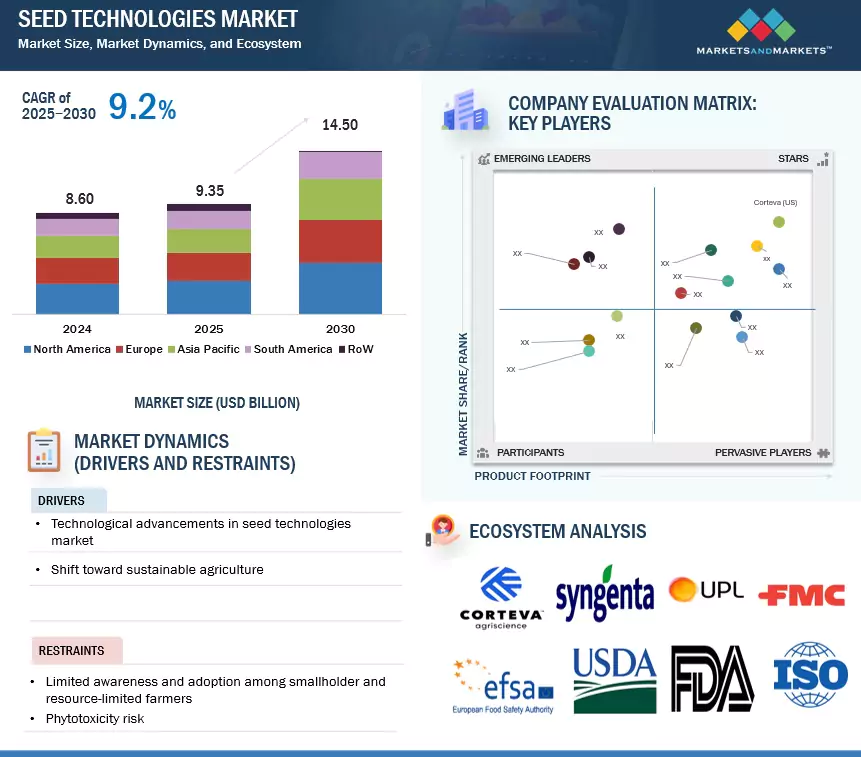
The global seed technologies market is projected to grow from USD 9.35 billion in 2025 to USD 14.50 billion by 2030, registering a CAGR of 9.2% during the forecast period. Growth is fueled by the rising adoption of high-value hybrid and genetically modified seeds and the increasing need for early-stage crop protection.

Seed Technologies Market

Shifts in agricultural practices—such as restrictions on foliar pesticide use and the global move toward sustainable farming systems—are accelerating the demand for seed-applied solutions. At the same time, advancements in treatment formulations and integration with precision farming technologies are improving efficiency and outcomes. Supportive government policies and rising farmer awareness, particularly in emerging markets, are further propelling market expansion.

Download PDF Brochure: 
https://www.marketsandmarkets.com/pdfdownloadNew.asp?id=25852111

Market Insights by Function

Biological seed protection represents a significant share of the seed technologies market. This segment is gaining momentum as farmers and seed companies embrace eco-friendly crop protection solutions. Beneficial microbes, fungi, and bacteria are being deployed to defend seeds against soil-borne pathogens and pests, while also enhancing plant health and resilience.

Adoption is supported by growing regulatory pressure to limit synthetic chemicals and reduce residue levels. These biological treatments offer multiple mechanisms—such as pathogen suppression, systemic resistance induction, and nutrient solubilization—making them versatile complements or alternatives to conventional chemicals. The increasing emphasis on regenerative agriculture, organic farming, and soil health has reinforced demand. With continuous innovation and wider regulatory approvals, biological seed protection is becoming a mainstream component of seed treatment portfolios.

Market Insights by Crop Type

The oilseeds segment holds a notable share of the global seed technologies market. Crops such as soybean, canola, and sunflower are highly valued but also vulnerable to early-stage pests and diseases, driving demand for effective seed protection.

The rising adoption of hybrid and genetically modified oilseed varieties has further strengthened the role of seed treatments. Both chemical and biological solutions are being applied to safeguard yield potential. In addition, the push toward sustainable agriculture and advancements in treatment formulations continue to expand the adoption of seed-applied technologies in oilseed farming.

Request Sample Pages: 
https://www.marketsandmarkets.com/requestsampleNew.asp?id=25852111

Market Insights by Region

North America leads the global seed technologies market, supported by the extensive use of genetically modified and hybrid seeds in crops like corn, soybean, and canola. Farmers in the region rely heavily on seed treatments to protect high-value seeds from pests and diseases at the earliest growth stages.

The market benefits from strong agricultural infrastructure, advanced crop protection practices, and regulatory shifts away from foliar pesticides in the US and Canada, which favor targeted seed treatments. The demand for biological solutions is also increasing, driven by soil health concerns and consumer preference for residue-free produce.

North America’s leadership is reinforced by:

  1. Strong presence of global seed technology companies
  2. Ongoing R&D in next-generation formulations
  3. Integration with precision farming and conservation tillage practices


This combination positions North America as both the largest market and a global innovation hub for seed technologies.

Leading Seed Technologies Companies:

The report profiles key players such as BASF SE (Germany), Bayer AG (Germany), UPL (India), Corteva (US), Croda (UK), FMC (US), Nufarm (Australia), Syngenta (US), Germains Seed (UK), and Sumitomo Chemicals (Japan).