Tuesday, April 28, 2026

Planting Equipment Market Share Analysis: Leading Players and Strategies

The planting equipment market is projected to grow from USD 21.74 billion in 2026 and to reach USD 29.4 billion by 2031, at a Compound Annual Growth Rate (CAGR) of 6.3% during the forecast period. The planting equipment market is expanding as more farmers adopt modern and mechanized planting tools like planters, seed drills, and air seeders. These machines have proven to be highly advantageous for agriculture by enabling precise crop planting. Additionally, the government is encouraging the mechanization of farming, promoting sustainable practices, and boosting crop yields. This support further drives the growth of the planting equipment market. Currently, practices such as the use of GPS and variable rate seeding in precision farming are also fueling market expansion. In today’s agricultural landscape, precision farming is essential because it not only enhances crop productivity but also optimizes resource use and reduces costs.

Download PDF Brochure: https://www.marketsandmarkets.com/pdfdownloadNew.asp?id=26629474

Planting Equipment Market, By Type

The planting equipment market, by type, is segmented into planters, seed drills, air seeders, and others, each catering to specific crop and farm requirements. Planters account for a significant share due to their ability to ensure precise seed placement, uniform spacing, and optimal depth control, making them suitable for row crops such as corn and soybeans. Seed drills are widely used for cereals and grains, offering efficient sowing over large areas. Air seeders are gaining traction in large-scale farming due to their high capacity and ability to handle multiple seed types.

Planting Equipment Market, By Design

The planting equipment market, by design, is segmented into mechanical and automated systems, each addressing different levels of farm mechanization and technological adoption. Mechanical planting equipment continues to hold a significant share, particularly in developing regions, due to its lower cost, ease of operation, and suitability for small and medium-sized farms. In contrast, automated planting equipment is witnessing faster growth, driven by increasing adoption of precision agriculture technologies such as GPS guidance, sensors, and variable rate seeding. These systems enable higher accuracy, improved efficiency, and reduced labor dependency, making them increasingly preferred in large-scale and technologically advanced farming operations.

Request Sample Pages: https://www.marketsandmarkets.com/requestsampleNew.asp?id=26629474

North America held the second-largest share in the planting equipment market.

North America ranks second in the market due to the high level of mechanization in agriculture and the prevalence of large-scale commercial farms. The region mainly focuses on crops like corn, soybeans, and wheat, which require precise planting. Widespread use of planting equipment, along with strong dealers and manufacturers such as Deere & Company and AGCO Corporation, is expected to further boost the market in North America. Additionally, the adoption of technologies like GPS and automation is also likely to support market growth in the region.

The report profiles key players such as Deere & Company (United States), AGCO Corporation (United States), CNH Industrial N.V. (United Kingdom), Väderstad AB (Sweden), Kinze Manufacturing (United States), Bourgault Industries Ltd. (Canada), KUHN Group (France), SeedMaster Manufacturing Ltd. (Canada), HORSCH Maschinen GmbH (Germany), MaterMacc S.p.A. (Italy), LEMKEN GmbH & Co. KG (Germany), Maschio Gaspardo (Italy), Kubota Corporation (Japan), Sfoggia Agriculture Division (Italy), and Yanmar Co., Ltd. (Japan).

Tuesday, April 14, 2026

US Aquafeed Market Size, Share & Growth Forecast Report 2026–2031

 The US aquafeed market is projected to grow from USD 1.44 billion in 2026 and to reach USD 1.98 billion by 2031, at a Compound Annual Growth Rate (CAGR) of 6.5% during the forecast period. The US aquafeed market is growing as demand for seafood increases and commercial fish farming grows. Farmers seek faster growth and higher survival rates for aquatic species. They prioritize efficient feed conversion and consistent production. Intensive farming systems rely on balanced formulated feed to support daily performance and minimize losses. Species like salmon, trout, catfish, and tilapia depend entirely on compound aquafeed for nutrition. Producers also emphasize feed efficiency and cost management. This fuels demand for protein-rich ingredients and functional additives. Aquaculture producers prefer diets that are scientifically validated and easy to manage. Greater focus is also placed on fish health, water quality, and sustainable farming practices. Many farms now use automated feeding systems, which facilitate the use of standard dry pellet feed. Feed directly impacts production volume, fish quality, and farm profitability. Therefore, aquafeed remains a key input in US aquaculture, maintaining steady demand across the market.


Download PDF Brochure: https://www.marketsandmarkets.com/pdfdownloadNew.asp?id=3345366

Amino acids under the additives segment of the US aquafeed market are estimated to hold the largest share in the US aquafeed market during the forecast period.

In the US aquafeed market, amino acid additives hold the largest share because they directly support faster growth, better feed efficiency, and improved protein utilization in fish and shrimp. Aquaculture producers focus on performance, uniform growth, and high survival rates. Essential amino acids such as lysine, methionine, and threonine help meet specific nutritional needs at different growth stages. They also promote muscle development and overall health. Since these benefits are clear and measurable, feed manufacturers regularly include amino acids, keeping this segment at the top.

The grower phase of the lifecycle is estimated to be the fastest-growing during the forecast period in the US aquafeed market.

The grower stage is expected to experience the fastest growth in the US aquafeed market during the forecast period. This stage lasts longer than both the hatchery and starter phases, making it essential for fish development since they gain most of their body weight during this time. To support consistent growth and ensure efficient feed conversion, farmers use large amounts of feed. As US aquaculture farms aim to boost output and shorten time-to-market, there is increased focus on the quality of grower feed. Additionally, stocking density is higher during this stage, further increasing total feed usage. Since feed costs are among the highest operating expenses for farms, producers are investing in well-balanced grower diets that promote weight gain and help protect profit margins. Due to the longer duration of this stage and the higher feed intake, the grower segment is expected to see the most significant growth in the US aquafeed market throughout the forecast period.

Request Sample Pages: https://www.marketsandmarkets.com/requestsampleNew.asp?id=3345366

Crustaceans under the species segment will register the highest CAGR during the forecast period in the US aquafeed market.

The crustacean segment in the US aquafeed market is expanding as shrimp farming increases. The USDA’s 2023 Census of Aquaculture reports 51 saltwater shrimp farms in the US, mostly in Florida and Texas, with seven inland farms in Iowa, Kentucky, Minnesota, and Missouri. Shrimp makes up about 38% of total seafood consumption in the country. The average American consumes around 5.5 pounds per year, totaling more than 1.5 billion pounds annually. However, the US imports roughly 90% of its shrimp, which opens significant opportunities for domestic production growth.

As inland and coastal shrimp farms expand, feed demand rises because shrimp rely entirely on formulated aquafeed for growth and survival. Many new farms use closed-loop Recirculating Aquaculture Systems to enhance efficiency and minimize water loss. With high consumer demand, heavy import dependence, and growing domestic production, the crustaceans’ segment is expected to grow at a faster pace in the US aquafeed market during the forecast period.

Leading US Aquafeed Companies:

The report highlights key players such as Cargill (US), ADM (US), dsm firmenich (Switzerland), Nutreco (Netherlands), Alltech (US), Purina Animal Nutrition LLC (US), Adisseo (France), Kemin Industries, Inc. (US), Darling Ingredients (US), Rangen LLC (US), The Scoular Company (US), Novus International (US), Norel Animal Nutrition (Spain), Kent Nutrition Group (US), and Beneo (Germany), among others.

Crop Protection Chemicals Market Growth, Demand & Competitive Landscape

 The crop protection chemical market is estimated at USD 83.32 billion in 2025 and is projected to reach USD 106.26 billion by 2030, at a CAGR of 5.0% from 2025 to 2030. The advancement of global trade in agricultural commodities has created a lot of pressure upon the farmer to meet stringent quality, appearance, and phytosanitary standards that would invariably increase the use of crop protection products. Agricultural labor shortages in several parts of the world have accelerated the trend toward chemical solutions as cheaper and easily scalable alternatives to manual weed and pest control. The organized retail, contract farming, and food processing industries are creating more and stronger demand for uniform, residue-compliant produce, indirectly facilitating continued adoption of crop protection chemicals across the global agriculture value chain.


Download PDF Brochure: https://www.marketsandmarkets.com/pdfdownloadNew.asp?id=380

The synthetic crop protection chemicals segment holds the highest market share, by origin

Synthetic products hold the highest share in the origin segment of the crop protection chemical market, primarily due to their proven efficacy, broad-spectrum activity, and consistent performance across diverse crops and agro-climatic conditions. In particular, they are able to deliver both quick and reliable control levels of weeds, pests, and diseases. Thus, synthetic herbicides, fungicides, and insecticides are considered the best options in agro-commercial and large-scale farming systems. The highly standardized manufacturing processes, extended shelf life, and compatibility with modern applications provide features that favor developed countries and commercial farms for their usage. In addition, on the entire hectare basis of coverage, synthetic chemistry typically has a more economical response to the costs involved, which is important for farmers who want to get as much yield as possible while controlling input costs.

The soil treatment segment holds a significant share in the market, by mode of application

Soil treatment holds a significant share in the mode of application segment, as it combats key problems caused by soil-borne pathogens, nematodes, and root diseases that impact crop establishment and yield. The use of crop protection chemicals in soil drenching, seed bed treatment, and root-zone application supports better microbial colonization and long-term protection. Organic practices that enhance soil health, improve nutrient uptake, and minimize early-stage crop losses have found wide acceptance in horticulture, row crops, and protected cultivation systems.

Request Sample Pages: https://www.marketsandmarkets.com/requestsampleNew.asp?id=380

Based on region, Asia Pacific holds a large share in the crop protection chemical market.

The Asia Pacific region holds a significant share of the crop protection chemical market due to its vast agricultural base, high cropping intensity, and strong reliance on agriculture for food security and rural livelihoods. Important staple crops, mainly rice, wheat, maize, and pulses, which are produced largely on a global scale, do require regular management pertaining to weeds, pests, and diseases. Smallholder-style dominant farming systems, varied cropping cycles, and year-round cultivation in many countries increase the frequency of crop protection chemical use. Besides, rapid population increases and rising food consumption drive governments and farmers to focus on yield stability and loss prevention. Enhancing access to crop protection inputs, strengthening distribution networks, and increasing adoption of modern farming practices tend to offer great demand across key markets, including China, India, Southeast Asia, and Australia.

Leading Crop Protection Chemicals Companies:

The report profiles key players such as BASF SE (Germany), Bayer AG (Germany), FMC Corporation (US), Syngenta Group (Switzerland), Corteva (US), UPL (India), Nufarm (Australia), Sumitomo Chemical Co., Ltd (Japan), Albaugh LLC (US), Koppert (Netherlands), Gowan Company (US), American Vanguard Corporation (US), Kumiai Chemical Industry Co., Ltd (Japan), PI Industries (India), and BioFirst Group (Belgium).

Agriculture Utility Adjuvants Market Report with Regional Analysis and Forecast

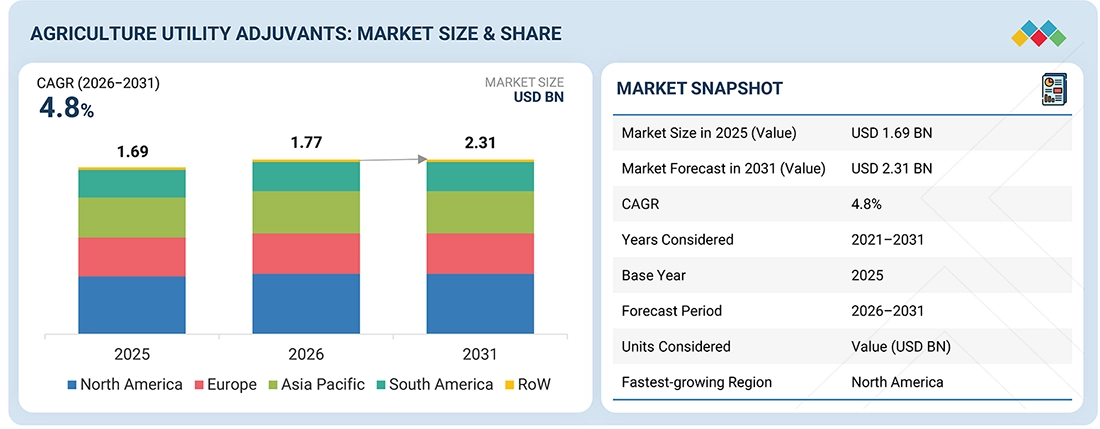
 The agriculture utility adjuvants market is projected to reach USD 2.31 billion by 2031 from USD 1.77 billion in 2026, at a CAGR of 4.8% from 2026 to 2031. The global utility adjuvants market is experiencing rising demand due to increased attention from farmers on optimizing the quality of spray water, tank mixes, and the effectiveness of crop protection agents. Stricter government regulations concerning environmental safety, spray precision, and pesticide use have further supported market growth. The adoption of precision farming techniques has also created a need for more reliable spray solutions. Additionally, manufacturers are increasingly emphasizing the use of water conditioners, buffering agents, anti-foaming agents, and compatibility enhancers to improve the physical and chemical stability of spray mixtures. Utility adjuvants play a vital role in neutralizing hard water minerals, maintaining pH levels, controlling foam formation, and ensuring the compatibility of multiple agrochemicals in the same spray tank. Rising farmer interest in effective application methods and reducing chemical wastage is also driving the development of advanced utility adjuvants to boost operational efficiency and preserve active ingredients. As modern agriculture continues to evolve toward higher productivity and sustainability through precision practices, the utility adjuvants market is expected to remain a key part of the global crop protection industry.


Download PDF Brochure: https://www.marketsandmarkets.com/pdfdownloadNew.asp?id=131568926

The emulsifiable concentrates segment holds a significant market share in the formulation segment.

Emulsifiable concentrates (EC) also hold a significant market share in the formulation segment of the utility adjuvants market because of their excellent compatibility and ability to blend with crop protection products. This formulation type allows for the emulsification of oil-soluble functional ingredients to mix with water in the spray tank, ensuring an even distribution of active and performance-enhancing ingredients. The capacity to maintain solution stability across varying water qualities and conditions makes this formulation type suitable for large-scale agricultural spraying activities.

Furthermore, using emulsifiable concentrates improves the functional efficiency of utility modifiers, which in turn enhances mix qualities, prevents separation, and makes product application easier through spraying. Additionally, the product's versatility, including herbicides, fungicides, and insecticides, boosts its market viability. Moreover, the growing demand for versatile, ready-to-mix liquid formulations that work in diverse climates increases the dominance of the emulsifiable concentrates segment in the formulation market.

In the application segment, herbicides is the fastest-growing segment in the global agricultural adjuvants market.

The global agricultural utility adjuvants market is growing fastest in the herbicide application segment. The increased adoption of herbicides to combat rising weed resistance issues, along with the expanding use of conservation tillage methods, drives this growth. Spraying adjuvants improve herbicide effectiveness by enhancing spray coverage, droplet retention, cuticle penetration, and rainfastness, leading to better active ingredient performance. The agriculture industry needs utility adjuvants to meet the growing demand driven by precision spraying technology and tank-mix applications for herbicides. Dual pressures from regulations demanding better pesticide practices and environmental protection motivate farmers to use adjuvants for effective weed control at lower chemical application levels.

Request Sample Pages: https://www.marketsandmarkets.com/requestsampleNew.asp?id=131568926

Based on region, Europe holds a significant share in the global agricultural utility adjuvants market.

Based on the region-wise segmentation, Europe has emerged as a prominent player in the global utility adjuvants market due to its strong regulatory environment and focus on sustainable agriculture. The region has implemented strict policies regarding pesticide use, drift prevention, water conservation, and environmental safety. These regulations have increased the demand for high-quality water conditioners, buffering agents, compatibility agents, and anti-foaming agents to ensure the responsible use of agrochemicals. Additionally, the adoption of precision agriculture tools, such as variable-rate sprayers and digital spray-monitoring devices, is very high in Europe. These tools require well-conditioned and stable spray solutions to perform optimally, which also drives demand for utility adjuvants. Furthermore, Europe's well-established agrochemical industry, ongoing R&D efforts in formulation sciences, and the growing preference for bio-based and eco-friendly products further reinforce its position in the global market. Lastly, government initiatives supporting the utility adjuvant market amid current market conditions are expected to continue boosting the industry.

The extensive agricultural landscapes of countries such as France, Germany, Spain, and Italy have created opportunities for farmers to use more crop protection products and tank mix adjuvants. The widespread adoption of precision farming and crop management practices has greatly increased the demand for tank mix adjuvants. Additionally, the growing preference for bio-based, environmentally friendly products has supported the sustainable use of pesticides and crop protection solutions. The rapid innovation in specialty chemicals and agrochemicals has positioned Europe as a leading region in the tank mix adjuvants market.

Leading Agriculture Utility Adjuvants Companies:

The report profiles key players such as BASF SE, Corteva Agriscience, Croda International Plc, Evonik Industries AG, Solvay SA, Nufarm Ltd., Dow Inc., Clariant AG, Huntsman Corporation, Helena Agri-Enterprises LLC, Wilbur-Ellis Company LLC, Stepan Company, Brandt Consolidated Inc., Akzo Nobel N.V., and Adjuvant Plus Inc.

Thursday, April 9, 2026

Microirrigation Systems Market Size, Trends, and Forecast 2025–2030

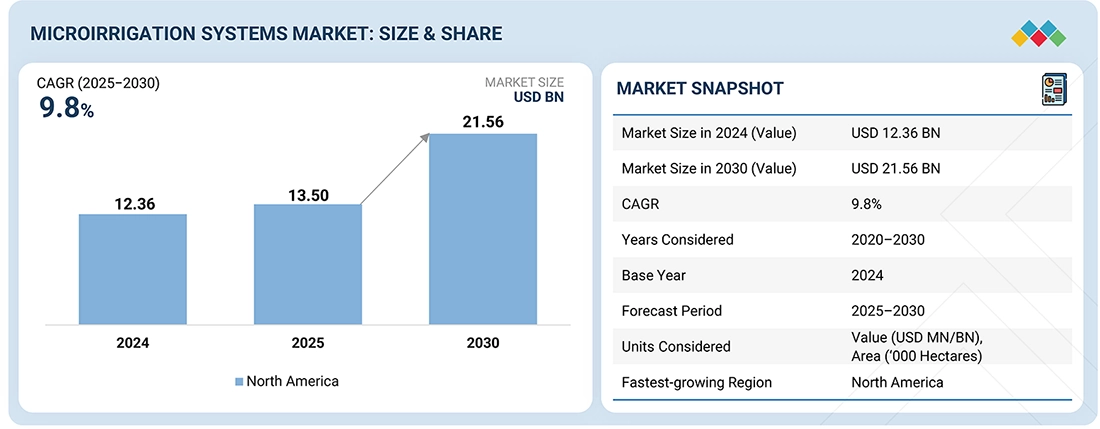
The microirrigation systems market is projected to grow from USD 13.50 billion in 2025 to reach USD 21.56 billion by 2030, at a Compound Annual Growth Rate (CAGR) of 9.8% during the forecast period. The microirrigation systems market is expanding due to ongoing improvements in irrigation hardware, software, and services. Modern microirrigation systems now often include automation and smart control technologies. This allows for precise scheduling, real-time flow regulation, and consistent water distribution. These features enable farmers to optimize when and how much they irrigate, significantly reducing water waste, energy use, and reliance on labor while boosting efficiency. At the same time, advances in sensor technology, remote monitoring, and data analysis are changing irrigation from a reactive task into a proactive, data-driven process. Monitoring soil moisture, weather conditions, evaporation rates, and crop-specific water needs in real time enables growers to adjust irrigation strategies based on current field conditions. This can improve crop health, ensure more consistent yields, and increase resilience to climate change and water shortages.


Furthermore, combining fertigation systems with digital irrigation platforms enables precise nutrient delivery with water. This improves the effectiveness of fertilizers and reduces runoff, benefiting the environment. Cloud-based platforms, mobile apps, and IoT connections make these systems easier to use by providing valuable insights, alerts, and performance tracking. Together, these innovations are enhancing returns for farmers and speeding up the adoption of microirrigation systems, particularly in high-value crops, greenhouses, and areas facing water scarcity. This trend supports long-term market growth.

Download PDF Brochure: https://www.marketsandmarkets.com/pdfdownloadNew.asp?id=566

By type, the sprinkler irrigation segment is projected to be fastest growing segment.

The micro sprinkler segment is expected to be the fastest-growing within the microirrigation systems market during the forecast period, driven by its ability to balance precision, coverage, and operational efficiency. Micro sprinklers deliver uniform water distribution across fields, orchards, and gardens, and can be strategically positioned to irrigate specific zones or individual plants. This targeted coverage ensures that each plant receives adequate moisture, reducing both under- and over-irrigation and supporting healthier plant growth.

Compared with conventional sprinkler systems, micro sprinklers operate at lower pressures and flow rates, which significantly reduces energy consumption for pumping and lowers overall operating costs. They are particularly well-suited for orchards, vineyards, nurseries, and plantation crops, where wider root zones and canopy coverage are required. In addition, micro sprinklers perform well on uneven terrain and in soils with lower infiltration rates, offering greater flexibility across varied agronomic conditions. These advantages, combined with rising emphasis on water efficiency and energy savings, are accelerating the adoption of micro sprinkler systems and positioning the segment for strong growth over the forecast period.

By end user, industrial user is estimated to be the fastest-growing segment during the review period.

The industrial user segment is expected to be the fastest-growing part of the microirrigation systems market during this review period. This growth is driven by a growing focus on environmental sustainability, operational efficiency, and regulatory requirements. Industrial users, which include commercial agribusinesses, plantations, food processors with their own farms, and large institutional growers, are increasingly adopting microirrigation technologies to practice eco-friendly water management. These systems help reduce water waste, reduce fertilizer and pesticide runoff, and improve resource use. This makes them an attractive option for organizations looking to lower their environmental impact while keeping up productivity.

Technological progress is also boosting adoption among industrial users. Modern microirrigation systems can be monitored and controlled remotely through IoT-enabled platforms, mobile apps, and computer dashboards. This allows for real-time changes to irrigation schedules, flow rates, and fertigation settings. Remote access is especially useful for businesses managing large or spread-out operations. It adds convenience, improves decision-making, and lowers the need for on-site labor. As sustainability goals, cost-cutting, and digital transformation become vital to industrial operations, demand for new microirrigation solutions is likely to accelerate further.

Request Sample Pages: https://www.marketsandmarkets.com/requestsampleNew.asp?id=566

Asia Pacific is estimated to be the fastest-growing region during the study period.

The Asia Pacific region is increasingly affected by irregular rainfall patterns, prolonged droughts, and frequent heat waves, all of which are intensifying pressure on agricultural water management. Under these volatile climatic conditions, microirrigation systems play a critical role in delivering regulated and efficient water distribution, helping farms maintain productivity despite reduced or unpredictable water availability. By supplying water directly to the root zone in controlled quantities, microirrigation reduces water stress on crops and enhances their resilience to extreme weather events.

Microirrigation systems also allow farmers to fine-tune irrigation schedules and application volumes based on specific crop requirements, soil conditions, and growth stages. This level of precision enables crops to better endure and adapt to changing climatic conditions, improving survival rates and yield stability. In addition, irrigation water in some regions may contain high levels of salts, heavy metals, or other contaminants, which can negatively affect soil health and crop productivity. To address this, microirrigation systems can be equipped with filtration and purification units that remove impurities before water reaches the plants. As a result, crops receive cleaner water, leading to improved plant health, higher yields, and reduced long-term damage to soil and crop systems caused by poor water quality.

Leading Microirrigation Systems Companies:

Eminent players operating in the microirrigation systems market are Jain Irrigation Systems Ltd. (India), The Toro Company (US), Netafim (Israel), Nelson Irrigation (US), Rain Bird Corporation (US), Finolex Plasson (India), Mahindra EPC Irrigation Limited (India), T-L Irrigation (US), Hunter Industries (US), Rivulis (Israel), Chinadrip irrigation Equipment co., Ltd. (China), Elgo Irrigation Ltd. (Israel), Antelco (Australia), Microjet (South Africa), and Irritec S.p.A (Italy), among others.

Wednesday, April 8, 2026

Tank Mix Adjuvants Market Dynamics: Drivers, Restraints, and Opportunities

The tank mix adjuvants market is projected to reach USD 2.09 billion in 2026 and USD 2.71 billion by 2031, registering at a CAGR of 4.7% from 2026 to 2031. The tank mix adjuvants market is growing due to farmers' increased focus on maximizing the efficiency of applied pesticides, stricter regulations by governments on spray drift and environmental safety, and the mounting adoption of precision agriculture. Manufacturers are increasingly relying on surfactants, oil concentrates, drift control agents, and water conditioners to maximize the efficiency of herbicides, insecticides, and fungicides in integrated crop management practices. Farmers' strong focus on maximizing the efficiency of crop protection chemicals and the cost-effectiveness of their applications encourages the adoption of innovative adjuvant technologies to improve the efficiency of herbicide, insecticide, and fungicide applications in integrated crop management practices.


Download PDF Brochure: https://www.marketsandmarkets.com/pdfdownloadNew.asp?id=246363861

Emulsifiable concentrates segment is expected to hold a significant market share in 2031

Based on formulation type, the tank mix adjuvants market is dominated by the emulsifiable concentrates segment. The benefits of this formulation type include the capability to mix the oil-based active ingredients with water in the spray tank, leading to the formation of a consistent emulsion. This formulation increases the spreading, penetration, and absorption of active ingredients on the surface of the plants. This increases the suitability of the tank mix adjuvants for use in herbicide and insecticide tank mixes. This formulation type is also compatible with many crop protection products and nutrients. This increases the suitability of the formulation type for use in different crops and environmental conditions.

Herbicides segment is likely to be the fastest-growing in the tank mix adjuvants market from 2026 to 2031

Within the application segment, the herbicides segment emerges as the fastest-growing category in the global tank mix adjuvants market. This segment is primarily driven by the increasing incidence of herbicide-resistant weeds and the expansion of large-scale commercial farming. Tank mix adjuvants enhance herbicide efficacy by improving spray coverage, droplet size optimization, retention, and active ingredient penetration into plant tissues. The growing adoption of no-till and conservation agriculture practices further supports herbicide demand, accelerating adjuvant usage. Additionally, regulatory pressure to reduce overall pesticide loads encourages farmers to maximize herbicide performance through tank mix optimization, reinforcing this segment’s strong growth trajectory.

Request Sample Pages: https://www.marketsandmarkets.com/requestsampleNew.asp?id=246363861

Europe is expected to account for a significant share of the tank mix adjuvants market in 2031

Europe has emerged as a prominent region in the tank mix adjuvants market due to the implementation of stringent regulations that focus mainly on the sustainable use of pesticides and environmental protection. Regulations related to spray drift control, water protection, and residue management practices are expected to boost the demand for high-performance tank mix adjuvants. This, in turn, would lead to a high demand for high-performance surfactants, drift control agents, buffering agents, and water conditioning agents. The high agricultural landscape of France, Germany, Spain, and Italy has provided an opportunity for farmers to use more crop protection products and tank mix adjuvants. The high adoption rate of precision farming and crop management practices has significantly boosted the demand for tank mix adjuvants. The high demand for bio-based products that are environmentally friendly has aligned with the sustainable use of pesticides and crop protection products. The high rate of innovation in specialty chemicals and agrochemicals has made Europe a prominent player in the tank mix adjuvants market.

Leading Tank Mix Adjuvants Companies:

The report profiles key players such as BASF SE, Corteva Agriscience, Croda International Plc, Evonik Industries AG, Solvay SA, Nufarm Ltd., Dow Inc., Clariant AG, Huntsman Corporation, Helena Agri-Enterprises LLC, Wilbur-Ellis Company LLC, Stepan Company, Brandt Consolidated Inc., Akzo Nobel N.V., and Adjuvant Plus Inc.

Thursday, April 2, 2026

Agriculture Adjuvants Market Growth: Emerging Opportunities Through 2031

 The agricultural adjuvants market is projected to grow from USD 4.40 billion in 2026 and to reach USD 5.64 billion by 2031, at a Compound Annual Growth Rate (CAGR) of 4.5% during the forecast period. The agricultural adjuvants market is expanding as farmers increasingly focus on enhancing the effectiveness of pesticides. This growth is also driven by the implementation of stricter regulations by government bodies regarding spray drift and environmental safety, as well as the adoption of precision agriculture practices among farmers. Manufacturers are increasingly adopting the use of surfactants, oil concentrates, drift control agents, and water conditioners to maximize the effectiveness of herbicides, insecticides, and fungicides in the agricultural sector through the implementation of integrated crop management systems. The increasing focus of farmers on input optimization and cost-effectiveness is promoting the use of innovative adjuvant technologies that have the ability to increase the droplet deposition and penetration into the crop canopy and rain fastness. Increasing innovation in formulation chemistry and spray application technology is helping to create the opportunity to develop multi-functional and bio-based adjuvants with increased compatibility and stability. With modern agriculture increasingly focusing on productivity and sustainability, the agricultural adjuvants market is likely to continue to be an important and growing part of the global crop protection industry.

Download PDF Brochure: https://www.marketsandmarkets.com/pdfdownloadNew.asp?id=1240

Emulsifiable concentrates hold significant market share in formulation segment

By formulation, emulsifiable concentrates (EC) currently account for a significant market share. Emulsifiable concentrate formulations are largely preferred due to their capacity to mix oil-based ingredients with water evenly, creating stable emulsions that improve spray performance. These formulations increase the spreading, penetration, and absorption of active substances on plant surfaces, making them highly effective herbicides and insecticides. The agricultural adjuvants market is expected to see a rise in demand for effective and multi-functional spray solutions. The compatibility of emulsifiable concentrate adjuvants with a wide range of crop protection agents, as well as their effectiveness in a variety of field conditions, makes them highly sought after. Additionally, they facilitate better canopy coverage and improved rain-fastness than some conventional formulations.

In adoption stage segment, tank-mix adjuvants to exhibit fastest growth

By adoption stage, the tank mix segment is expected to witness a higher growth rate than the in-formulation segment. The direct application of tank-mix adjuvants to the spray mix at the point of application enables farmers to optimize the performance of their spray mixtures. This approach is particularly popular for herbicides, insecticides, and fungicides. Tank-mix adjuvants aid in improving deposition, spreading, penetration, and reducing drift of the spray mixture, while also ensuring compatibility among the various crop protection chemicals used in a single application. These adjuvants are especially valuable in large-scale row crop farming, where efficient resource use is critically important. The rising adoption of precision spraying technology and integrated crop management practices has further increased the demand for tank-mix adjuvants. Their cost-effectiveness, ease of use, and adaptability to various field conditions position them as leaders in the agricultural adjuvants market during this adoption stage.

Request Sample Pages: https://www.marketsandmarkets.com/requestsampleNew.asp?id=1240

Europe to hold significant share of global agricultural adjuvants market

Europe is estimated to account for a significant share of the agricultural adjuvants market. The robust regulatory environment in the European market, which focuses on sustainable pesticide use and environmental protection, fuels the demand for sophisticated adjuvant solutions that enhance spray efficacy and minimize drift. The stringent regulations regarding spray drift, water pollution, and residues further push farmers to use high-performance surfactants, drift control agents, and water-conditioning adjuvants. The well-developed agricultural sector in Europe, especially in France, Germany, Spain, and Italy, promotes regular consumption of agricultural protection products and their respective adjuvants. The rising use of precision farming technology and integrated crop management systems also enhances market growth. Furthermore, the emphasis on bio-based and environmentally compatible formulations is in line with the sustainability objectives of the region. Continuous innovation in the specialty chemical industry and agrochemical industry also makes Europe a prominent driver of technological development and steady growth in the agricultural adjuvants market.

Leading Agricultural Adjuvants Companies:

The report profiles key players such as BASF SE, Corteva Agriscience, Croda International plc, Evonik Industries AG, Solvay SA, Nufarm Ltd., DowDuPont (Dow Inc./Corteva heritage), Clariant AG, Huntsman Corporation, Helena Agri-Enterprises LLC, Wilbur-Ellis Company LLC, Stepan Company, Brandt Consolidated Inc., Akzo Nobel N.V., and Adjuvant Plus Inc.